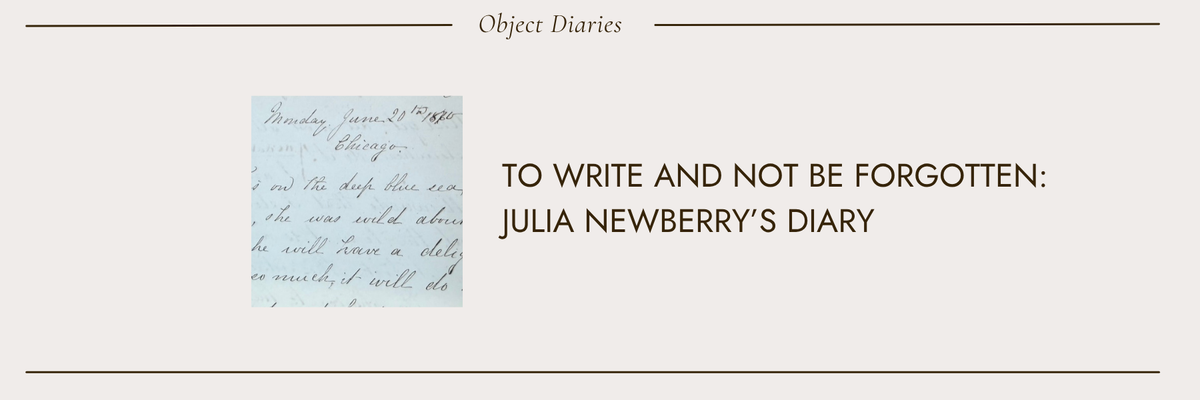
To Write and Not Be Forgotten: Julia Newberry's Diary

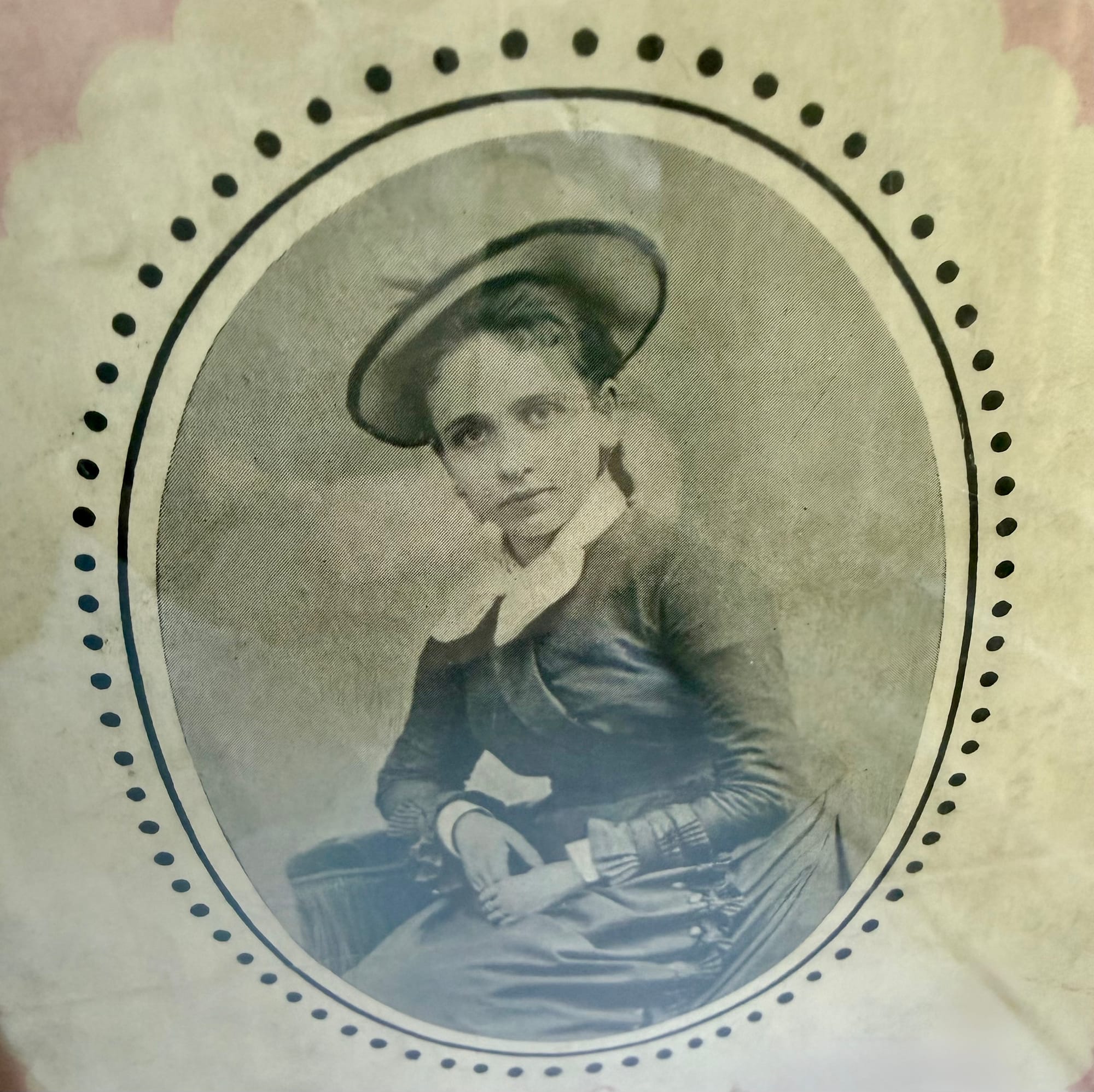
This is a story about a unique sort of object: a diary.
Last month, I visited the Newberry Library in Chicago and read the diary of a 19th-century heiress.
The pages still felt alive with the slanted script of a girl who died in 1876 at age 22. Her name was Julia Newberry. Her father had once told her to "Be somebody," but she worried people would forget her.
On December 27, 1869, Julia wrote in her diary (VAULT Case MS 4A 31 at the Newberry Library), "This is the last night I shall ever be fifteen."
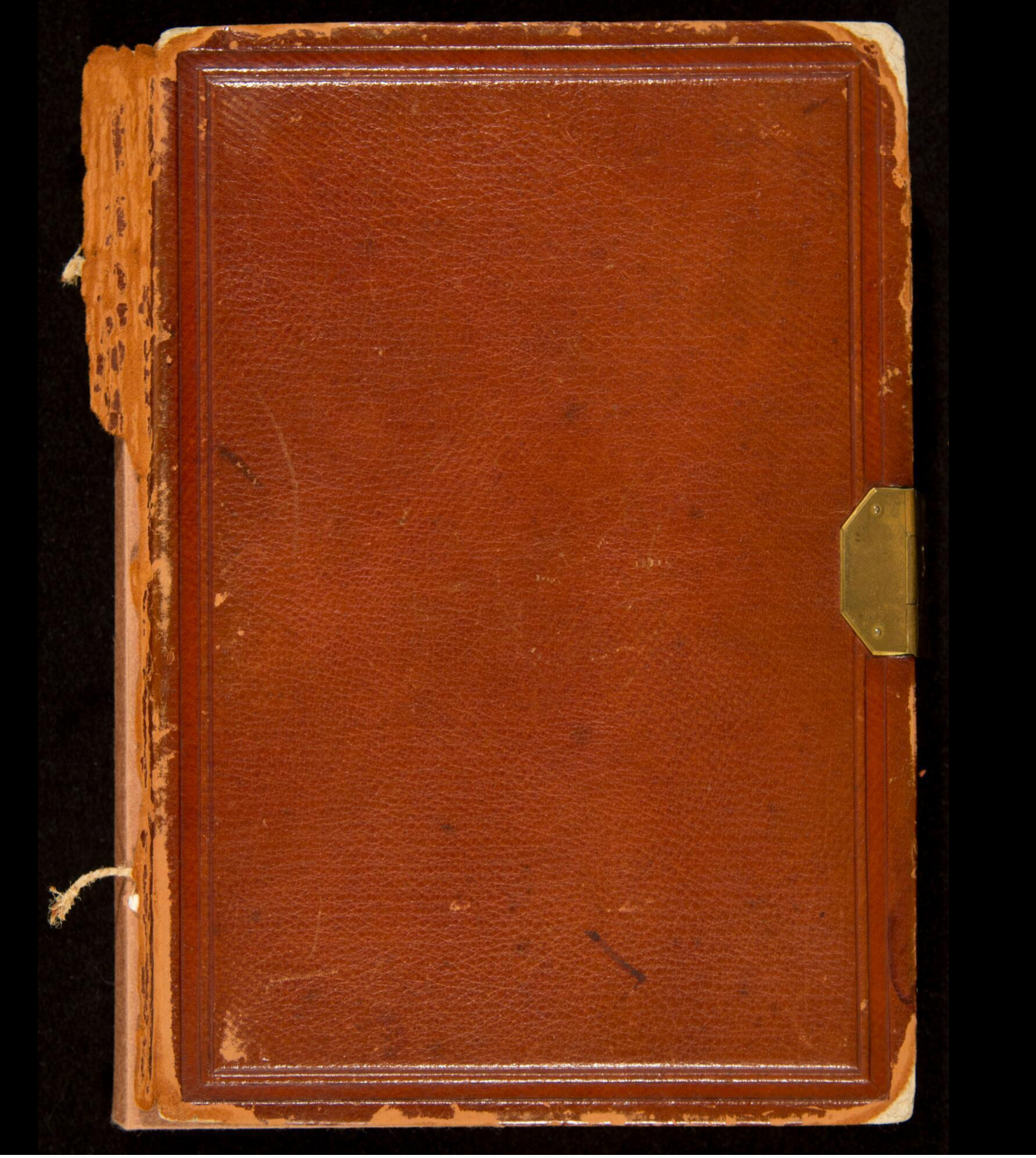
The younger daughter and heiress to Chicago real estate magnate Walter L. Newberry's fortune died just over six years later.
Julia's untimely death from diphtheria-like symptoms at age 22 — unmarried, having borne no children — was the last of her father's line. Her father, Walter, had already died aboard a steamer ship en route to Europe in 1867, his body famously preserved in a cask of rum. Julia's older sister Mary Louisa died in 1874. Their mother followed in 1885.
According to published records, Walter's will stipulated that if his two daughters produced no heirs, part of the estate would be "devoted to the founding of an immense library, to be known as the 'Newberry Library.'" The New York Times called the announcement "the sensation of the day" on December 12, 1885.
The prevailing cultural assumption, even today, is that a person's legacy carries on through their children. For most of recorded history, our identities, property, and wealth passed through bloodlines. Not exactly the case here.
Chicago heiress Julia Newberry — who wrote at 17 that she never "fancied herself in love," and who ultimately never married — still lives on in the Newberry Library.
Julia's memory endures in part because she was the daughter of a wealthy family with the means to establish a library bearing her surname. But more compellingly, Julia's story and voice survive because she recorded her daily life in a diary. And she never had children. The Newberry Library wouldn't exist if she had, and her diary might have been lost.
Anyone 14 or older with a Reader's Card at the Newberry can immerse themselves in Julia's life and times. The pages hold the ordinary — friends' names, breakfasts, boys, novels, parties, and sicknesses.
Also, the not-so-ordinary — travels to Paris, Geneva, and Naples; gifts of velvet bonnets and gold; an eight-inch alligator that Julia laments having met "a most untimely death" a few weeks after its arrival.
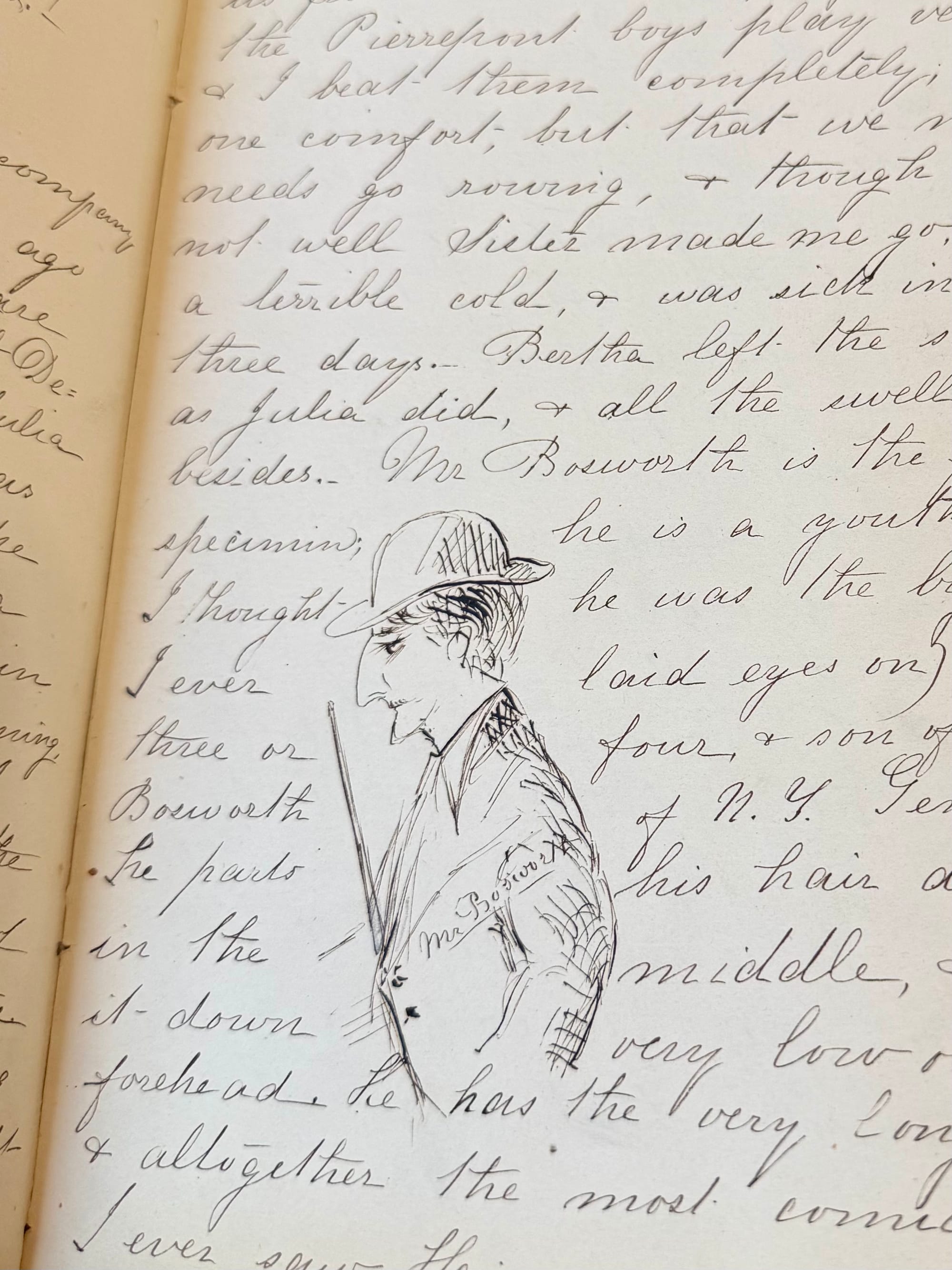
As I read the diary, I luxuriate in Julia's excesses and mourn her sadness. I feel the pangs of adolescent remorse as she refers to a Mr. Bosworth as a "snip," an insult of her era. Julia writes about her favorite books ("all that Charlotte Brontë ever wrote") and others she deemed "simply horrid" (Disraeli's Lothair). On page 113, she records that Charles Dickens died last Friday, June 9th. She details the early days of the Franco-Prussian War in real time. Her most poignant writing describes the Chicago fire's destruction of her childhood home and everything in it.
Decades after her death, on May 28, 1933, Anita Moffett celebrated the publication of Julia's diary in The New York Times, calling it "A Diary of Unusual Interest." A TIME Magazine review titled "Poor Little Rich Girl" was less favorable.
But Julia's own words tell a different story about how she saw herself. On July 4, 1869, she writes: "If I were obliged to earn my living I might make a name for myself that will last, but situated as I am, it is more than likely that I shall live a comfortable life and die and be forgotten."
Despite all the gold, suitors, and eight-inch alligators, Julia was just as afraid of being forgotten as the rest of us. Julia's sincere and vulnerable admission, I would argue, is key to the book's endurance.
By recording the petty and grand moments of life, as Julia Newberry did in her diary, she created a lasting testament to her humanity and cultural relevance. Diary keeping is no longer a privilege of the wealthy and the leisured. It is an accessible personal archive that future generations can read, explore, and perhaps even marvel at.
You never know who might find inspiration in your stories. Because, as Julia writes on July 4, 1867: "What a curious thing life is anyway."
Want more diary stories?
Listen to the episode "Gabrielle and Pamela's Diary" in the Object Diaries Limited-Series Podcast
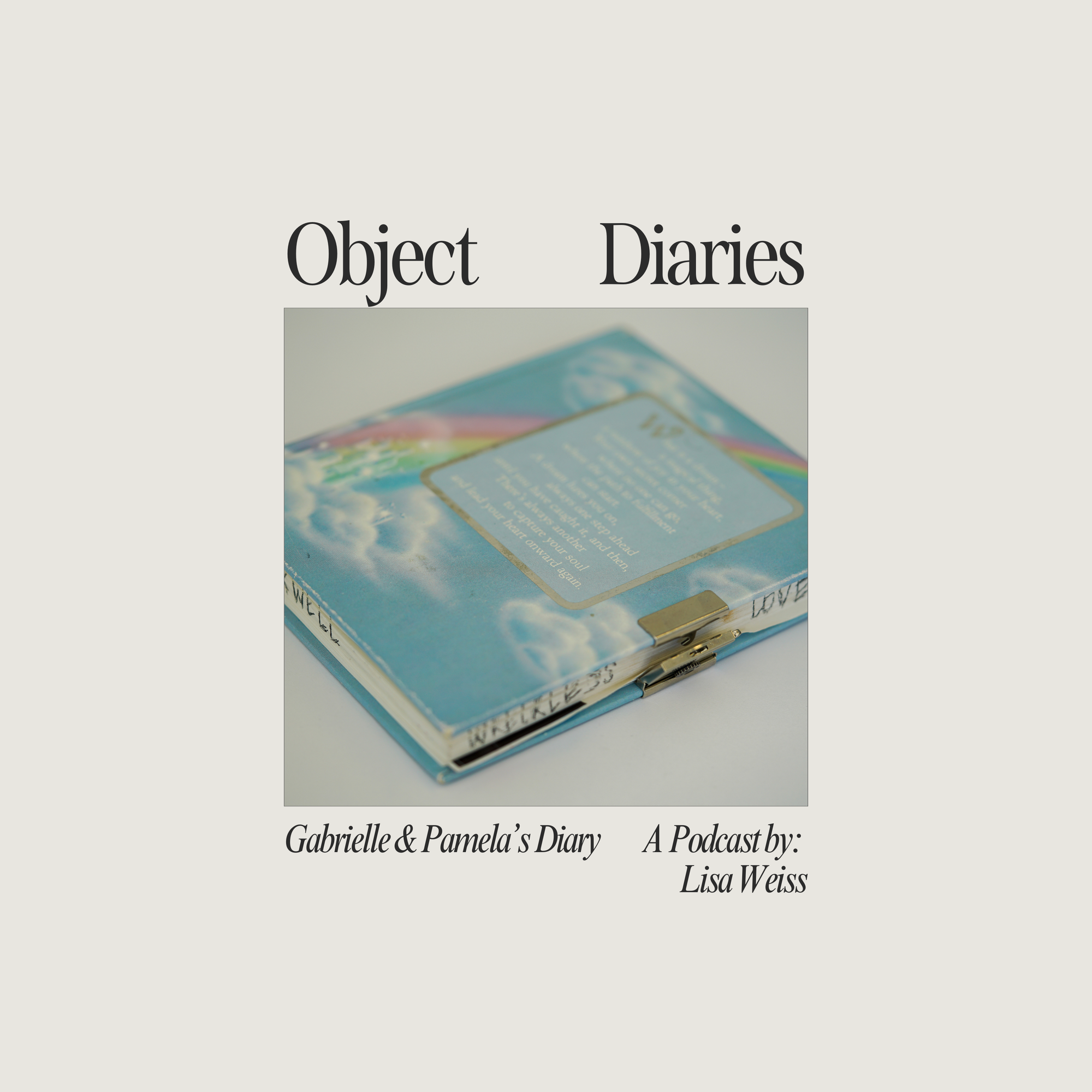
Gabrielle and Pamela's Diary
Gabrielle Blackwell was 28 when she wrote me a letter about a secret diary that she discovered in her mother's drawer as a young child. If this were only about a secret diary, it would be a good story. But this is so much more than that. It's about mothers and daughters, about the secrets we carry, and how sometimes an ordinary object can become an extraordinary tool for healing.
Click here to listen to this episode of the Object Diaries podcast, or find it wherever you get your podcasts.
Do you keep a diary, or have you in the past? Did anything in this story spark something for you? Hit reply and tell me. If this issue resonated, I'd love it if you could forward it to one person who might feel the same way.
Thank you for reading!

©Object Diaries® 2026. The Julia Newberry story is an adaptation and slight expansion of a blog post I wrote and published on the Newberrry Library blog.